
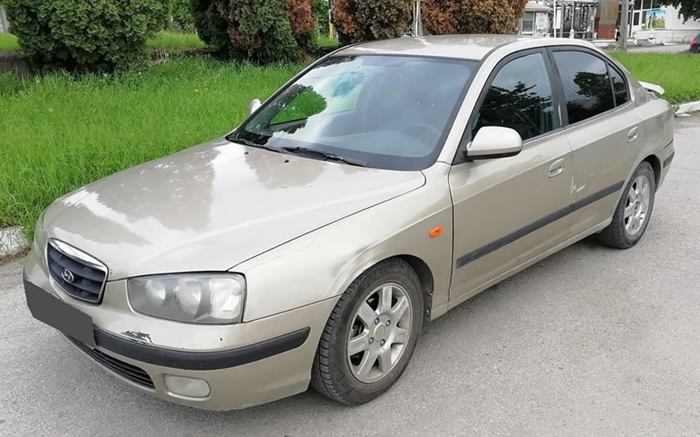
The Hyundai Elantra, a compact sedan, has undergone significant transformations since its inception in 1990. Originally introduced as the Lantra in some markets, the Elantra has evolved through multiple generations, each marked by advancements in design, technology, and performance.
This article aims to provide a detailed overview of the Elantra’s generational history and its technical specifications, illustrating how Hyundai has positioned this vehicle within the competitive automotive landscape.
First Generation (1990-1995)
The first generation of the Hyundai Elantra was launched in 1990 as a successor to the Hyundai Excel. Initially offered as a four-door sedan, it featured a modest design characterized by its angular lines and compact dimensions. The vehicle was powered by a 1.6-liter inline-four engine, producing a maximum output of approximately 92 horsepower. This generation was notable for its affordability and practicality, catering primarily to budget-conscious consumers.
The Elantra’s introduction marked Hyundai’s entry into the compact car segment, and it quickly gained a reputation for reliability and value. However, it faced stiff competition from established players such as the Honda Civic and Toyota Corolla.
Second Generation (1995-2000)
The second generation of the Elantra debuted in 1995, showcasing a more rounded and aerodynamic design. This iteration introduced a hatchback variant alongside the sedan, appealing to a broader audience. Engine options were expanded to include a 1.8-liter inline-four engine, delivering up to 130 horsepower. The increased power and improved handling contributed to a more engaging driving experience.
Technological advancements during this generation included the introduction of features such as anti-lock braking systems (ABS) and airbags, enhancing safety and comfort. The Elantra began to garner positive reviews, establishing itself as a competitive option within the compact segment.
Third Generation (2000-2006)
The third generation, launched in 2000, marked a significant redesign with a more modern aesthetic. The Elantra’s dimensions grew, providing increased interior space and comfort. Powertrain options were upgraded, with a 2.0-liter inline-four engine capable of producing 138 horsepower. This generation also saw the introduction of a five-speed automatic transmission, improving fuel efficiency and driving dynamics.
Moreover, Hyundai began to emphasize quality and refinement, leading to improved interior materials and build quality. The Elantra’s reputation for reliability continued to strengthen, and it began to attract a more diverse customer base.
Fourth Generation (2006-2010)
The fourth generation of the Elantra, introduced in 2006, featured a more aggressive and stylish design, aligning with contemporary automotive trends. The engine lineup included a 2.0-liter inline-four engine with a power output of 143 horsepower, coupled with either a five-speed manual or a four-speed automatic transmission. This generation was notable for its improved fuel efficiency and reduced emissions, reflecting Hyundai’s commitment to sustainability.
Safety features were further enhanced, with the inclusion of electronic stability control (ESC) and side curtain airbags. The Elantra received high safety ratings, contributing to its appeal among families and safety-conscious consumers.
Fifth Generation (2010-2015)
The fifth generation, launched in 2010, marked a significant departure in design philosophy, adopting Hyundai’s “Fluidic Sculpture” design language. The Elantra’s exterior became more dynamic, with flowing lines and a sleek profile. Under the hood, a 1.8-liter inline-four engine producing 148 horsepower was standard, while a more powerful 2.0-liter engine was available in sportier trims.
This generation was also characterized by advanced technological features, including a touchscreen infotainment system, navigation, and Bluetooth connectivity. The Elantra was well-received, earning accolades for its combination of style, performance, and value.
Sixth Generation (2016-Present)
The sixth generation of the Elantra debuted in 2016, featuring a refined design and an array of modern technologies. Engine options included a 2.0-liter inline-four engine with 147 horsepower and a turbocharged 1.6-liter engine producing 201 horsepower in the sportier Elantra Sport variant. The introduction of a seven-speed dual-clutch automatic transmission further enhanced driving dynamics.
Safety and technology continued to be a focus, with the availability of advanced driver assistance systems such as lane-keeping assist and adaptive cruise control. The Elantra’s interior quality improved, offering a more upscale experience for occupants.
Conclusion
Throughout its history, the Hyundai Elantra has evolved significantly, reflecting changes in consumer preferences and advancements in automotive technology. Each generation has built upon the successes of its predecessor, offering improved performance, safety, and features. As Hyundai continues to innovate, the Elantra remains a strong contender in the compact sedan market, appealing to a wide range of drivers seeking a reliable and stylish vehicle. The ongoing evolution of the Elantra exemplifies Hyundai’s commitment to quality and customer satisfaction in an ever-changing automotive landscape.